Decile (decile group)
A decile group is one tenth of all households arranged by their households incomes from minimum to maximum. The first decile group is the first one-tenth (i.e. 10% of all household with lowest incomes). The last decile is the one-tenth of the households with the highest incomes. Not all households are consistently in the same decile group from one year to the next.
Equivalence Scales
Equivalence scales take into account economies of scale within the household, and adjust for household size so that households of different sizes and compositions are comparable. There are different scales used by different countries and international organisations.
Expenditure
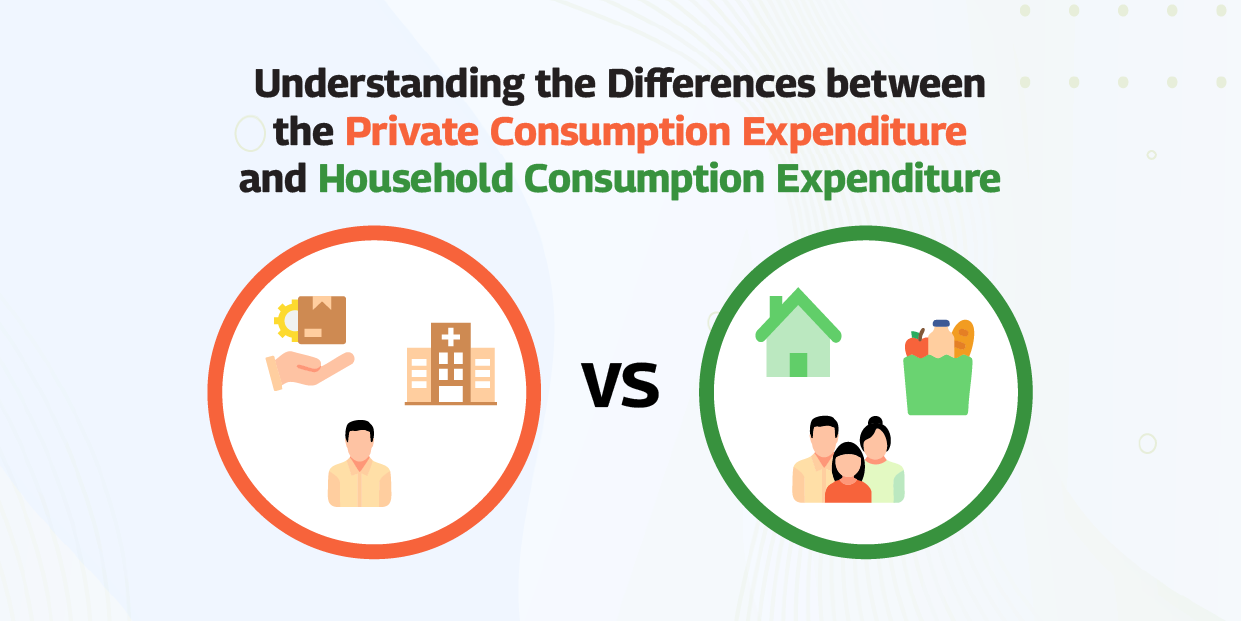
Refer to consumption expenditure incurred by households. Household consumption expenditure is the value of consumer goods and services acquired, used or paid for by a household for the satisfaction of the needs and wants of its members. Non-consumption expenditure such as loan repayments, income taxes, purchase of houses is excluded.
The consumption expenditure on owner-occupied accommodation is estimated using the rental equivalence method, which measures the shelter cost in terms of the expected rental the owner would have to pay if he were a tenant of the premises. It is estimated based on the Annual Assessed Values (AAVs) provided by the Inland Revenue Authority of Singapore (IRAS). Monthly mortgage repayments are not included in the consumption expenditure on owner-occupied accommodation.
The imputed rental of owner-occupied accommodation is included when analysing the detailed share of household expenditure by goods and services.
Government Transfers
Government Transfers are unrequited assistance/benefits provided by the Government to households or individuals and can be in cash or in-kind. Based on international standards and guidelines, capital housing transfers (e.g. CPF Housing Grant) that are large, lump sum and one-off payments have an effect beyond the year as well as an investment impact, and hence not within the scope of household income statistics.
Government Taxes
Government Taxes are compulsory, unrequited payments made by households or individuals to the Government in cash or in-kind.
Type of Goods and Services
Expenditure by the type of goods and services are classified according to the Singapore Classification of Individual Consumption according to purpose (SCOICOP). In line with the principles of the United Nations (UN) COICOP, the SCOICOP categorises consumption expenditures according to their primary "functions" or "purposes". The expenditure items are classified into 14 broad divisions as follows:
- Food and Non-Alcoholic Beverages
- Alcoholic Beverages and Tobacco
- Clothing and Footwear
- Housing and Utilities
- Furnishing, Household Equipment and Routine Household Maintenance
- Health
- Transport
- Information and Communication
- Recreation, Sport and Culture
- Education
- Food and Beverage Serving Services
- Accommodation Services
- Insurance and Financial Services
- Personal Care, Social Services and Miscellaneous Goods and Services
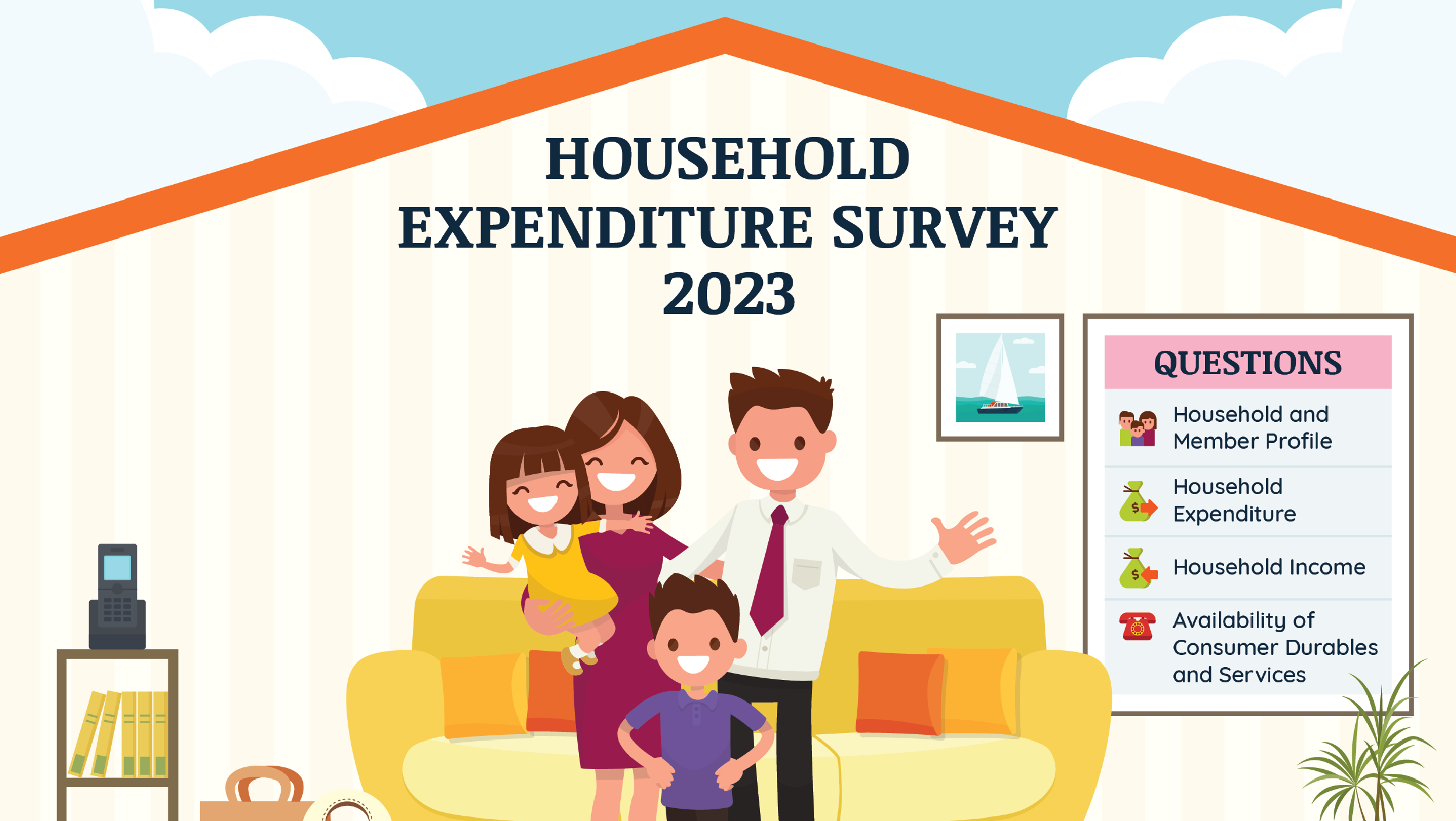
Household Expenditure Survey
Please refer to the Household Expenditure Survey Glossary of Terms and Definitions.